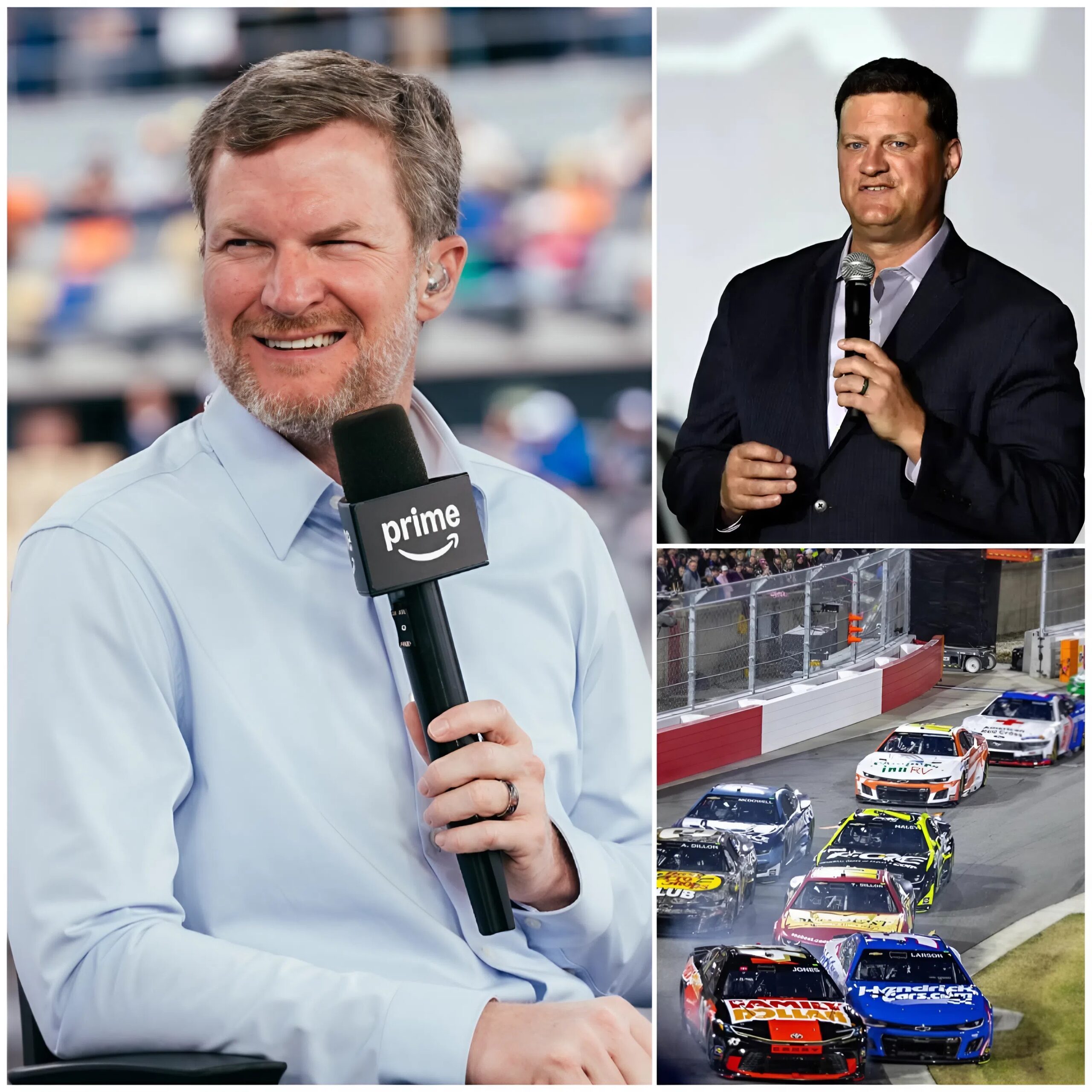
BREAKING NEWS: Dale Earnhardt Jr. Submits Major List of Demands to NASCAR Ahead of the 2026 Season
Dale Earnhardt Jr. has never been one to speak recklessly, but when the most influential voice in modern NASCAR chooses to speak firmly, the garage listens. Ahead of the 2026 season, Earnhardt Jr. has reportedly submitted a serious and detailed list of demands to NASCAR management—a move that has already sent shockwaves through the sport and ignited intense discussion among team owners, drivers, and fans alike.
While Earnhardt Jr. no longer competes full-time behind the wheel, his impact on NASCAR has arguably never been greater. As a Hall of Fame driver, team owner, broadcaster, and cultural ambassador for stock car racing, his opinions carry uncommon weight. Sources close to the situation indicate that this list of demands is not about personal benefit, but rather about the long-term health, credibility, and sustainability of NASCAR as it enters a critical new era.
At the heart of Earnhardt Jr.’s concerns is the Next Gen car, a vehicle that has delivered closer racing but also sparked ongoing debates about safety, cost control, and competitive fairness. Though NASCAR has made adjustments since its debut, Earnhardt Jr. has consistently argued that fixes have been reactive rather than proactive. His message to leadership ahead of 2026 is clear: incremental tweaks are no longer enough.
Another major issue reportedly included in Earnhardt Jr.’s demands is officiating consistency. In recent seasons, NASCAR has faced mounting criticism over late-race cautions, playoff-deciding calls, and perceived inconsistencies in rule enforcement. Earnhardt Jr., speaking both publicly and privately, has emphasized that fans must trust the integrity of race outcomes. According to insiders, he is pushing for clearer guidelines, improved transparency, and better communication between race control, teams, and viewers.
The playoff format itself is also believed to be under scrutiny. While the current system has delivered drama and unpredictable moments, critics argue it sometimes undermines season-long excellence. Earnhardt Jr. has walked a careful line on this topic in the past, acknowledging the entertainment value while questioning whether the championship always reflects true performance. His latest stance suggests he wants NASCAR to seriously evaluate adjustments before fan frustration grows deeper.
Beyond competition, Earnhardt Jr.’s demands reportedly extend to the business side of the sport. Charter security, revenue distribution, and long-term financial stability for teams are said to be central themes. With rising costs and shrinking margins, many mid-level organizations are struggling to remain competitive. Earnhardt Jr., as a team owner himself, understands these pressures firsthand and appears determined to ensure NASCAR does not price out its own backbone.
There is also a cultural component to his message. NASCAR has worked hard to modernize its image and expand its audience, but Earnhardt Jr. believes that evolution must not come at the expense of the sport’s identity. Sources say he is urging leadership to strike a better balance between innovation and tradition, ensuring that longtime fans remain engaged while new audiences feel welcomed.
What makes this moment especially significant is timing. The 2026 season represents more than just another year on the calendar—it is a crossroads. Media rights, manufacturer commitments, and fan demographics are all in flux. Earnhardt Jr.’s decision to present these demands now suggests he sees a narrowing window to enact meaningful change.
Reactions around the NASCAR community have been swift. Some team owners reportedly welcome Earnhardt Jr.’s intervention, viewing it as overdue leadership from someone who understands the sport from every angle. Others worry that public pressure could complicate negotiations already underway behind closed doors. NASCAR officials, for their part, have remained tight-lipped, though insiders indicate that meetings between Earnhardt Jr. and senior executives are expected in the coming weeks.
Fans, meanwhile, are divided—but engaged. On social media, many praise Earnhardt Jr. for “saying what everyone is thinking,” while others caution that sweeping changes could create unintended consequences. What is undeniable is that his involvement has reignited conversation at a time when NASCAR cannot afford complacency.
Dale Earnhardt Jr. has long positioned himself as a steward of the sport rather than a disruptor. This latest move reinforces that image. He is not threatening to walk away, nor is he issuing ultimatums for attention. Instead, he appears to be doing what he has always done best—advocating fiercely for a sport he loves, even when it means challenging those in power.
As NASCAR heads toward the 2026 season, one thing is clear: the status quo is no longer guaranteed. Whether leadership embraces Earnhardt Jr.’s demands or resists them may shape the direction of stock car racing for the next decade. And if history is any indication, ignoring Dale Earnhardt Jr. has never been a wise strategy.