Denny Hamlin Breaks Silence on NASCAR’s Future After Steve Phelps’ Exit
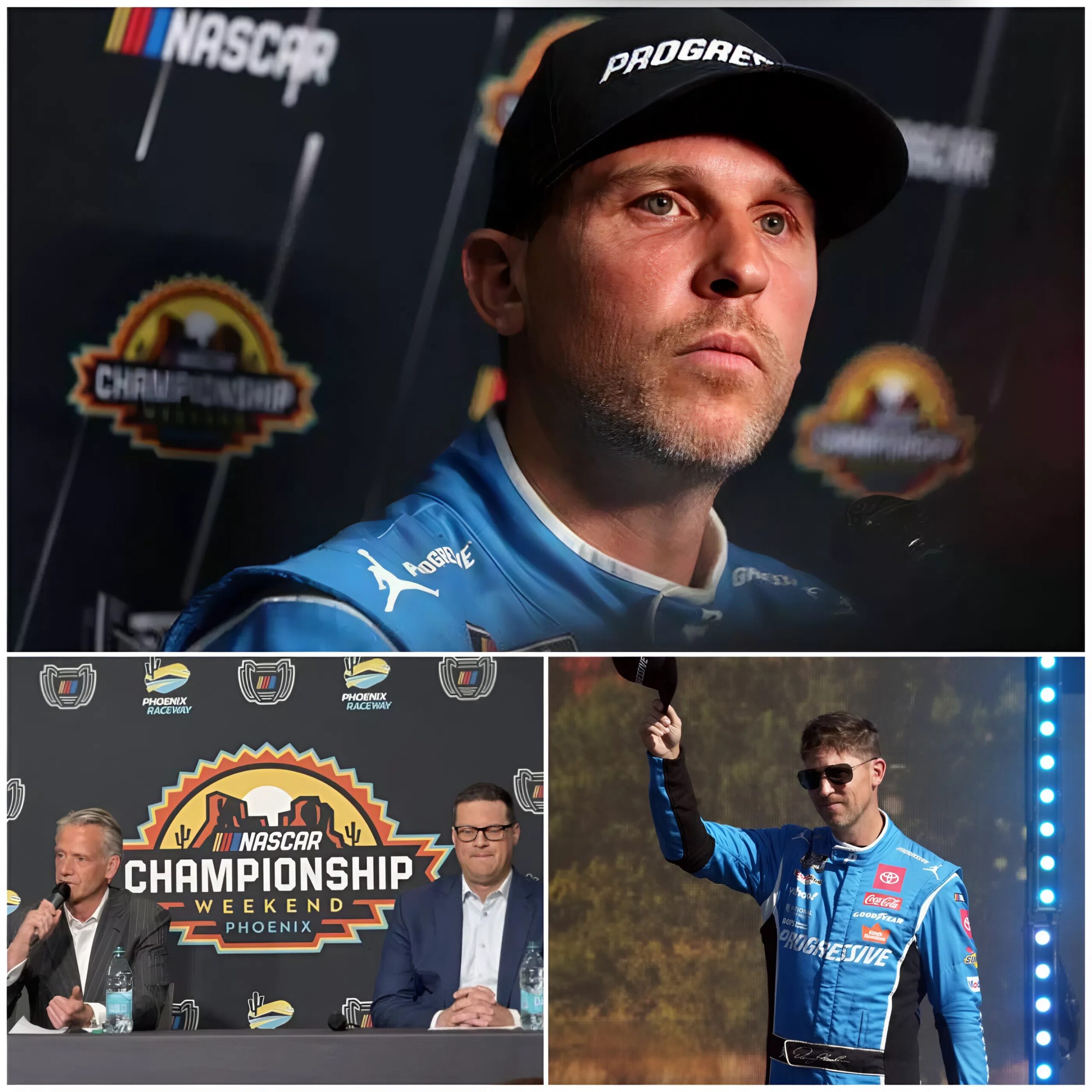
The NASCAR world is no stranger to change, but few recent developments have sparked as much quiet intrigue as the departure of Steve Phelps from his leadership role. While the sanctioning body has offered measured statements and reassurances, one voice fans were waiting to hear belonged to Denny Hamlin. This week, the veteran driver and team co-owner finally broke his silence, and his message struck a tone that surprised many: confidence in NASCAR’s future.
Hamlin’s perspective carries unusual weight. He is not only a perennial contender on the track, but also a key decision-maker off it as a co-owner of 23XI Racing. That dual role places him at the intersection of competition, business, and long-term strategy, making his reaction to Phelps’ exit especially revealing. Rather than expressing concern or uncertainty, Hamlin projected calm optimism, suggesting that NASCAR may be entering a period of necessary and healthy evolution.
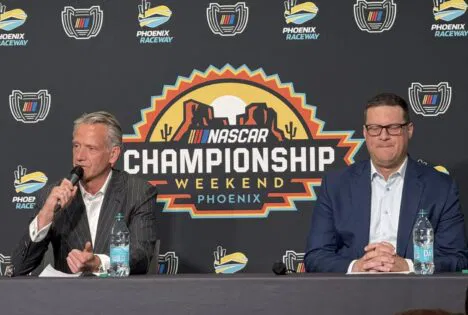
Steve Phelps’ tenure was defined by ambitious growth strategies, aggressive marketing initiatives, and a willingness to experiment with the sport’s format. While some of those moves were applauded, others fueled persistent criticism from fans who felt NASCAR was drifting away from its roots. His exit, therefore, symbolized more than a personnel change; it marked the end of a philosophy that shaped the modern era of stock car racing.
Hamlin acknowledged that reality without leaning into controversy. In his remarks, he emphasized that NASCAR’s foundation remains strong, pointing to its loyal fan base, competitive teams, and increasingly balanced field of drivers. According to Hamlin, leadership transitions are not signs of instability but opportunities for recalibration, especially in a sport that must constantly balance tradition with innovation.
What stood out most was Hamlin’s belief that NASCAR is beginning to listen more closely than before. He hinted that recent decisions have reflected a growing awareness of fan sentiment and competitive integrity, a subtle nod to the ongoing conversation about gimmicks versus authentic racing. That acknowledgment resonated with many fans who have long felt unheard, and it positioned Hamlin as a bridge between the garage, the front office, and the grandstands.
Industry insiders suggest that Phelps’ departure could lead to a more collaborative leadership structure, one that relies heavily on input from teams and drivers. Hamlin’s comments appeared to support that notion. He spoke about open dialogue, shared responsibility, and the importance of trust between NASCAR and its stakeholders. For a driver who has often been outspoken and critical when warranted, the absence of alarmism spoke volumes.
From a business standpoint, Hamlin also addressed concerns about sponsorship stability and media partnerships. NASCAR, he argued, remains an attractive platform with strong brand recognition and untapped potential. The emergence of new teams, diverse ownership groups, and international interest has helped insulate the sport from short-term turbulence. In Hamlin’s view, leadership changes do not erase decades of infrastructure and investment built into the NASCAR ecosystem.
Fans quickly reacted to Hamlin’s remarks, with social media conversations reflecting a mix of relief and curiosity. Some welcomed his optimism as a sign that insiders see a clearer path forward than the public does. Others questioned whether confidence alone is enough to address deeper structural challenges. Still, the prevailing tone was more hopeful than hostile, a notable shift in online NASCAR discourse.
Hamlin’s credibility plays a major role in shaping that response. Unlike executives, he competes weekly under the rules NASCAR enforces. Unlike fans, he sits in meetings where future decisions are debated. That rare vantage point allows him to speak with authority while maintaining relatability, a balance few figures in the sport manage to achieve.
The timing of his comments is also significant. NASCAR is navigating a critical moment, with evolving car technology, changing media consumption habits, and a younger generation of fans redefining engagement. Leadership clarity matters, and Hamlin’s confidence suggests that behind the scenes, a vision is taking shape, even if it has not yet been fully revealed to the public.
Perhaps most telling was Hamlin’s refusal to frame the moment as a crisis. Instead, he described it as a transition, one that could ultimately strengthen NASCAR’s identity. In doing so, he challenged the assumption that stability requires stagnation. Growth, he implied, often comes through uncomfortable but necessary change.
As NASCAR prepares to outline its next chapter, voices like Hamlin’s will continue to influence perception. His calm assurance does not guarantee success, but it offers something the sport has often lacked during periods of upheaval: measured confidence rooted in experience rather than spin.
For now, fans are left watching closely, reading between the lines of every statement and decision. Steve Phelps’ exit closed one chapter, but as Denny Hamlin made clear, the story of NASCAR’s future is far from finished. If his confidence is any indication, the sport may be on steadier ground than many expected.