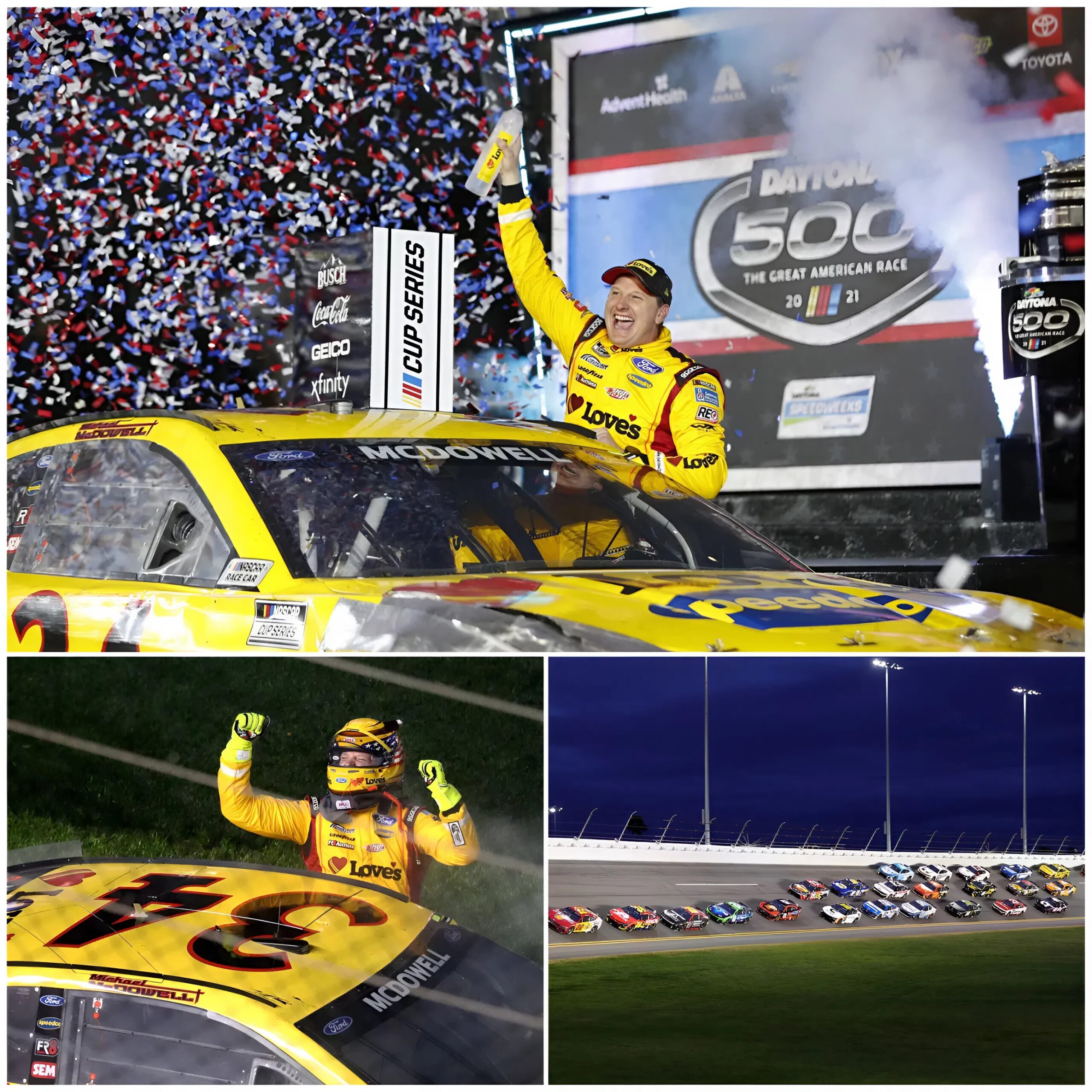
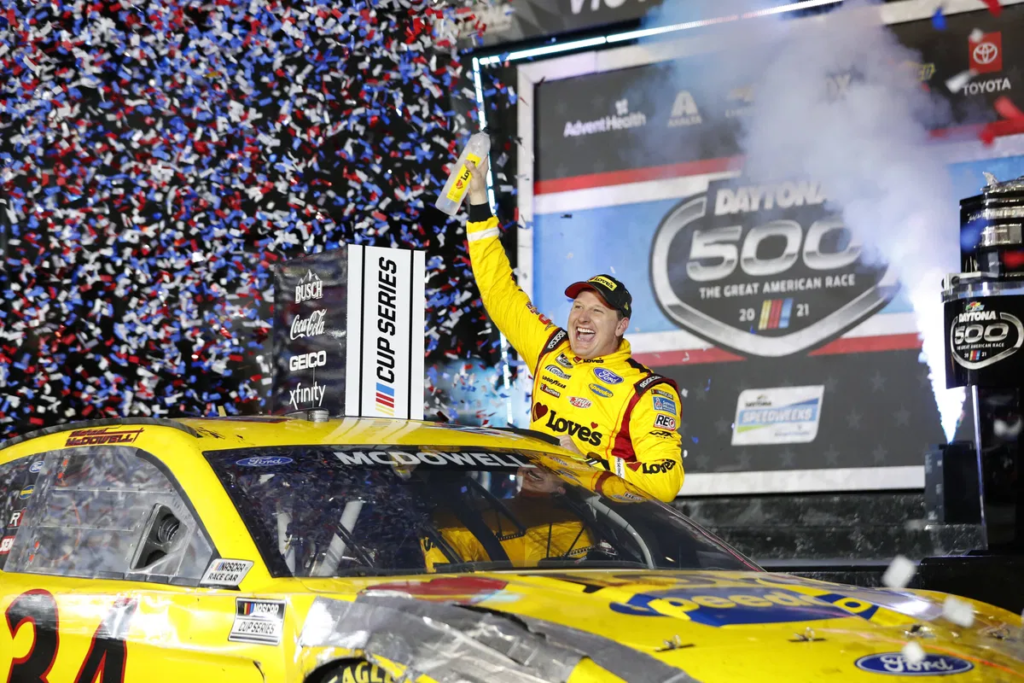
Former Daytona 500 Champ Drops 9-Word Truth On Surviving NASCAR’s Super Bowl
The Daytona 500 has long been called NASCAR’s Super Bowl, a race so massive in scale and emotion that even seasoned champions admit it feels different from every other event on the calendar. The pressure, the pageantry, the unpredictability — it all collides under the Florida sun in a way that defines careers and reshapes legacies. This week, a former Daytona 500 champion distilled that overwhelming experience into a simple nine-word truth that perfectly captures what it takes to survive stock car racing’s biggest stage: “Patience, trust, and timing mean everything at Daytona.”
Those nine words may sound straightforward, but inside the high-speed chess match that is the Daytona 500, they carry the weight of hard-earned wisdom. Unlike other NASCAR Cup Series races, where handling, tire wear, and long-run speed can separate contenders from pretenders, the Daytona 500 is dictated by drafting, split-second decisions, and the ever-present threat of “The Big One.” One miscalculated move at 200 mph can end months of preparation in an instant.
For former champions, surviving the Daytona 500 is not just about raw speed. It’s about understanding the rhythm of the race. The 2.5-mile superspeedway demands mental discipline as much as mechanical precision. Drivers must navigate tight packs where inches matter and momentum swings can make or break an entire afternoon. Every push, every lane change, every block is a calculated risk. That’s where patience comes in.
The Daytona 500 is 500 miles long for a reason. It is not won in the first 50 laps, and history has repeatedly shown that aggressive early moves often lead to early exits. Former winners know that the key is positioning yourself when it matters most — typically in the final 20 laps, when the intensity spikes and alliances are tested. Trust becomes critical in those closing moments. Drivers rely heavily on drafting partners, often competitors they’ve battled fiercely all season. At Daytona, cooperation can be just as important as competition.
Timing, the third pillar of that nine-word truth, may be the most elusive element of all. The perfect run often depends on being in the right lane at the right moment, catching the right push, or choosing the right time to make a decisive move. Some champions have won by inches, executing a last-lap pass that will be replayed for decades. Others have captured victory by surviving chaotic final-lap crashes, simply by being positioned just ahead of disaster. In NASCAR’s Super Bowl, timing is everything.
The weight of the Daytona 500 extends far beyond the checkered flag. Winning this race guarantees a place in NASCAR history. It elevates a driver’s status, cements sponsorship opportunities, and provides momentum that can carry through an entire season. For rookies, it represents a dream. For veterans, it’s often unfinished business. For former champions reflecting on their triumph, it remains a defining chapter.
Part of what makes the Daytona 500 so unique is its role as the season opener. Unlike stick-and-ball sports where championships conclude a year, NASCAR begins its campaign with its most prestigious event. That dynamic adds another layer of intensity. Teams arrive unsure of how they stack up against new rules packages, offseason changes, or fresh competition. The unknown creates opportunity — and danger.
Over the years, the race has produced some of the most iconic moments in motorsports history. From photo finishes to underdog victories, the Daytona 500 thrives on unpredictability. Even dominant teams can be swept up in multi-car wrecks through no fault of their own. Superspeedway racing compresses the field, leveling the playing field and allowing smaller teams to contend alongside powerhouse organizations.
The former champion’s nine-word reflection also underscores a mental battle that fans often overlook. Surviving Daytona is as much psychological as physical. Drivers must remain calm while navigating 30-plus cars locked together at breathtaking speeds. Spotters relay critical information from high above the track, crew chiefs adjust strategy on the fly, and drivers process it all in fractions of a second. One lapse in focus can trigger a chain reaction.
In recent years, NASCAR’s evolving rules and Next Gen car have added new wrinkles to superspeedway racing. The margins are tighter, the packs more aggressive, and the strategies more complex. Yet the core truth remains unchanged. Patience. Trust. Timing. Those principles transcend eras, car generations, and rulebooks.
Beyond the drivers, entire organizations feel the emotional gravity of the Daytona 500. Crew members who spend sleepless nights in the garage know that a single pit stop mistake can erase a championship-caliber performance. Engineers pour over data searching for marginal gains in drag and stability, understanding that even the smallest aerodynamic advantage can determine whether their car surges forward in the draft or stalls out at the worst possible moment. The preparation is relentless because the reward is unmatched.
There is also a business reality tied to NASCAR’s biggest race. Sponsors invest heavily for visibility on this stage, knowing the Daytona 500 delivers some of the highest viewership numbers of the season. A win here can redefine partnerships and secure long-term backing. For smaller teams, it can be transformative, opening doors that would otherwise remain closed. That added pressure only amplifies the importance of staying composed when the green flag waves.
Weather, too, has played a dramatic role in the race’s history. Rain delays, shifting track temperatures, and changing wind conditions can alter handling and drafting dynamics in an instant. Veterans often speak about reading not just the track, but the atmosphere — sensing when the energy in the pack grows restless and anticipating when aggressive moves are about to erupt. Survival sometimes means predicting chaos before it unfolds.
As anticipation builds for another Daytona 500, the words of a former champion resonate deeply across the garage. Young drivers hungry for their first win study film and simulation data, but experience cannot be downloaded. It is earned through laps led, mistakes made, and lessons absorbed. Veterans who have hoisted the Harley J. Earl Trophy understand that survival is the first objective. Winning comes second.
Fans, too, feel the magnitude of NASCAR’s Super Bowl. Grandstands swell with energy, millions tune in worldwide, and storylines collide in dramatic fashion. The Daytona 500 is not merely a race; it is a spectacle that defines the sport’s identity. Every February, it reminds the world why stock car racing commands such passion.
In the end, the former champion’s nine-word truth serves as both advice and warning. The Daytona 500 rewards those who respect its chaos and punishes those who underestimate it. It is a race where calculated restraint can be more powerful than reckless ambition, where collaboration can momentarily outweigh rivalry, and where the perfect move must wait for the perfect moment. Surviving NASCAR’s Super Bowl is never guaranteed, even for the best in the business. But as history has shown time and again, those who master patience, embrace trust, and seize timing when it matters most give themselves a fighting chance to etch their names alongside legends. And in a race where inches decide immortality, that chance is everything.