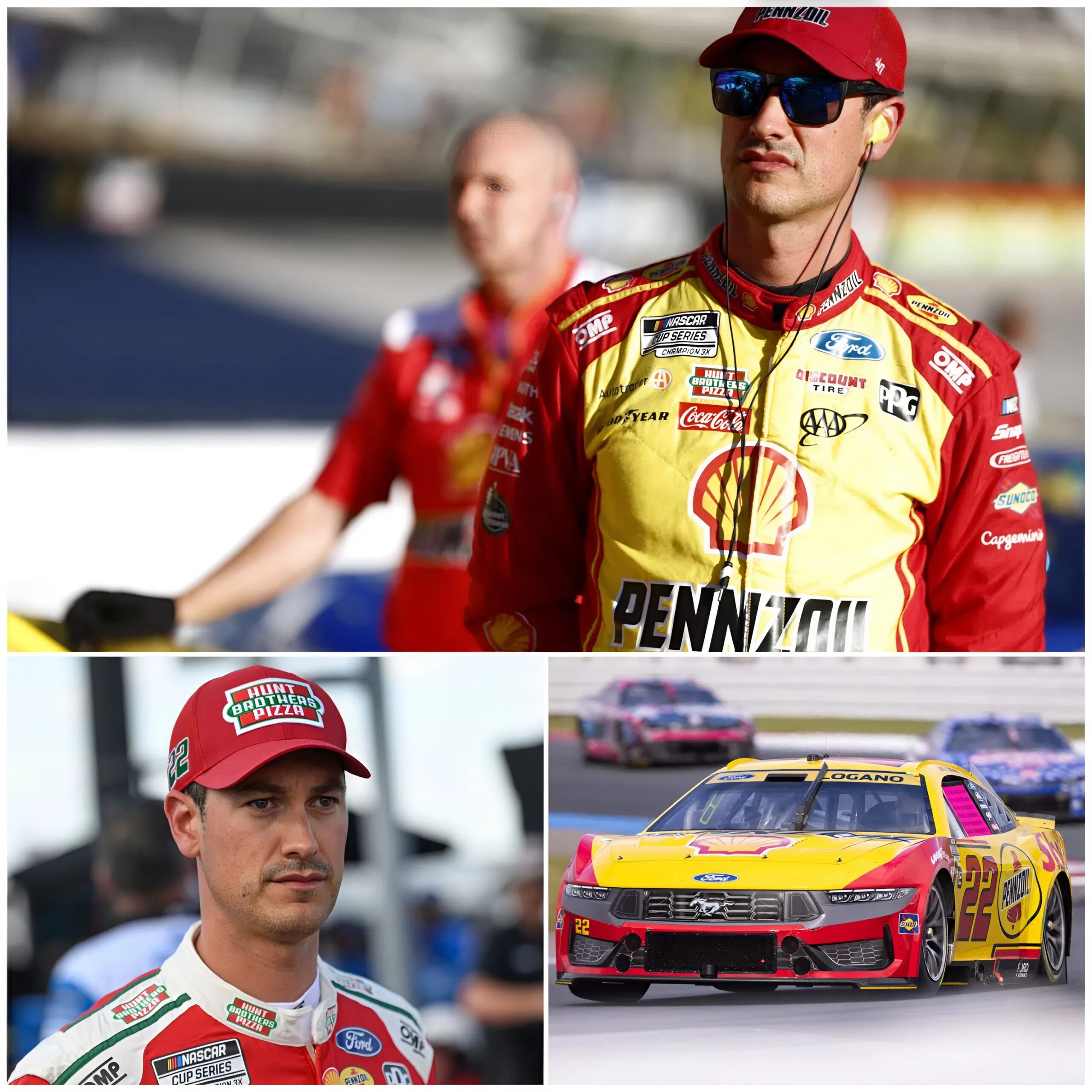
Joey Logano Quietly Accepts His Fate as Consistency Takes Over From Cutthroat Playoff Survival
Joey Logano has never been known as a driver who waits patiently for destiny to unfold. Throughout his NASCAR Cup Series career, he has thrived on aggression, opportunism, and a ruthless understanding of when to push and when to take risks. Championships are rarely won by those who play it safe, and Logano built his reputation by refusing to back down in the most unforgiving moments of the playoffs. Yet as the current season unfolds, a subtle but telling shift has emerged. Without public frustration, without dramatic radio messages, Logano appears to have quietly accepted a different reality — one where consistency, not chaos, defines his path forward.
In previous playoff runs, Logano’s approach was unmistakable. He hunted wins, forced the issue, and was willing to gamble everything on track position or bold restarts. It was a mindset shaped by NASCAR’s elimination-style postseason, where survival often depended on one explosive result rather than a string of solid finishes. That mentality brought him championships and cemented his status as one of the sport’s most formidable closers. But this season, the urgency feels different. The edges are smoother. The risks are calculated. And the desperation that once defined playoff survival seems replaced by acceptance.
That does not mean Logano has lost his competitive fire. If anything, the shift highlights a veteran driver reading the room — and the sport — with remarkable clarity. NASCAR has evolved. The field is deeper, margins are thinner, and parity has turned every weekend into a grind rather than a sprint. In such an environment, consistency has quietly regained its power. Logano’s recent performances reflect that understanding. Instead of all-or-nothing gambles, he has stacked respectable finishes, kept himself relevant in points, and avoided the race-ending mistakes that often come with forced aggression.
There is also the undeniable reality of age and experience. Logano is no longer the hungry young driver trying to prove he belongs. He is a former champion, a team leader, and a benchmark within Team Penske. That status brings perspective. The playoffs are no longer about proving fearlessness; they are about managing variables, limiting damage, and trusting that steady execution can still beat reckless ambition. Logano seems to have embraced that truth, even if it means surrendering the illusion of total control.
What stands out most is how quietly this acceptance has happened. There has been no public declaration, no dramatic interview signaling a philosophical shift. Instead, the change is visible in the choices made on pit road, the patience shown in traffic, and the calm tone over the radio. It is the behavior of a driver who understands that fate, in NASCAR, is often shaped by restraint as much as bravery. Logano is no longer fighting the system; he is working within it.
This approach also reflects a deeper understanding of the modern playoff format’s limitations. The system rewards wins, but it also punishes volatility. One mistake, one mechanical failure, or one poorly timed caution can erase weeks of dominance. Logano has lived through both sides of that equation. By leaning into consistency, he is effectively betting that survival no longer requires theatrical heroics, but disciplined execution. It is not flashy, but it is sustainable.
Critics may argue that this mindset dulls Logano’s edge. NASCAR fans have grown accustomed to his fearless restarts and controversial moments, the kind that spark debate long after the checkered flag. A quieter Logano risks fading into the background in a sport that thrives on drama. Yet that interpretation misses the point. This is not a retreat; it is an evolution. The most dangerous competitors are often the ones who adapt without announcing it.
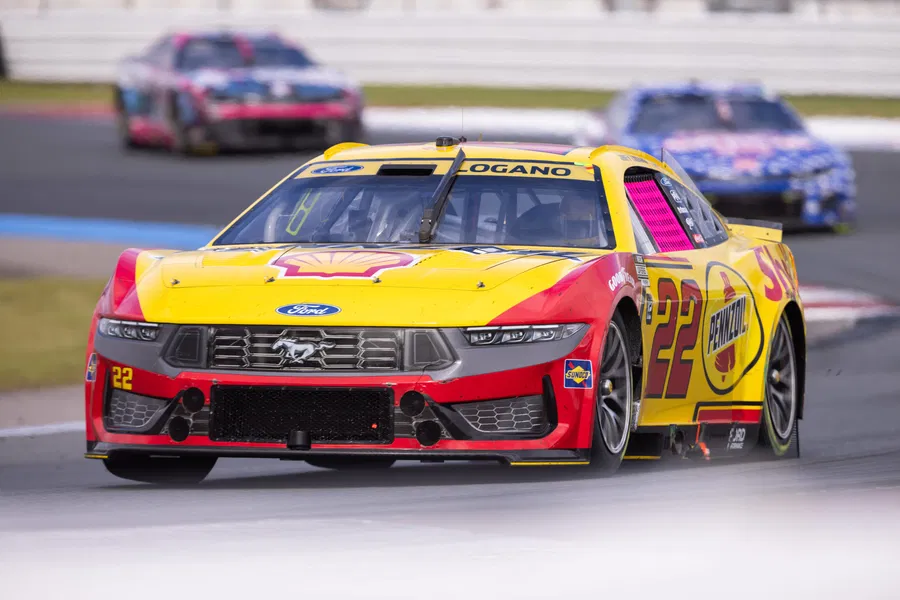
Inside the garage, this shift has not gone unnoticed. Rivals still respect Logano’s ability to strike when opportunity presents itself, but they also recognize a driver who is no longer easily baited into mistakes. That balance — the ability to remain calm until the moment truly matters — may prove more valuable than raw aggression in a playoff field crowded with equally talented drivers.
There is also a strategic layer at play. Team Penske has long emphasized execution, preparation, and minimizing unforced errors. Logano’s current approach aligns perfectly with that philosophy. Rather than chasing moments, he is building races piece by piece, trusting that the long game will create its own opportunities. In a season where unpredictability reigns, that trust may be the ultimate advantage.
As the playoffs progress, the question is not whether Joey Logano can still flip the switch when necessary. History suggests he can. The real question is whether consistency alone can carry him deep enough to make that switch meaningful. By quietly accepting his fate — not as resignation, but as recognition — Logano has positioned himself as one of the most intriguing figures in the postseason. He may not dominate headlines every weekend, but he remains exactly where contenders need to be: present, patient, and dangerous.
In a NASCAR era defined by chaos, Joey Logano’s calm acceptance might be the boldest move of all.