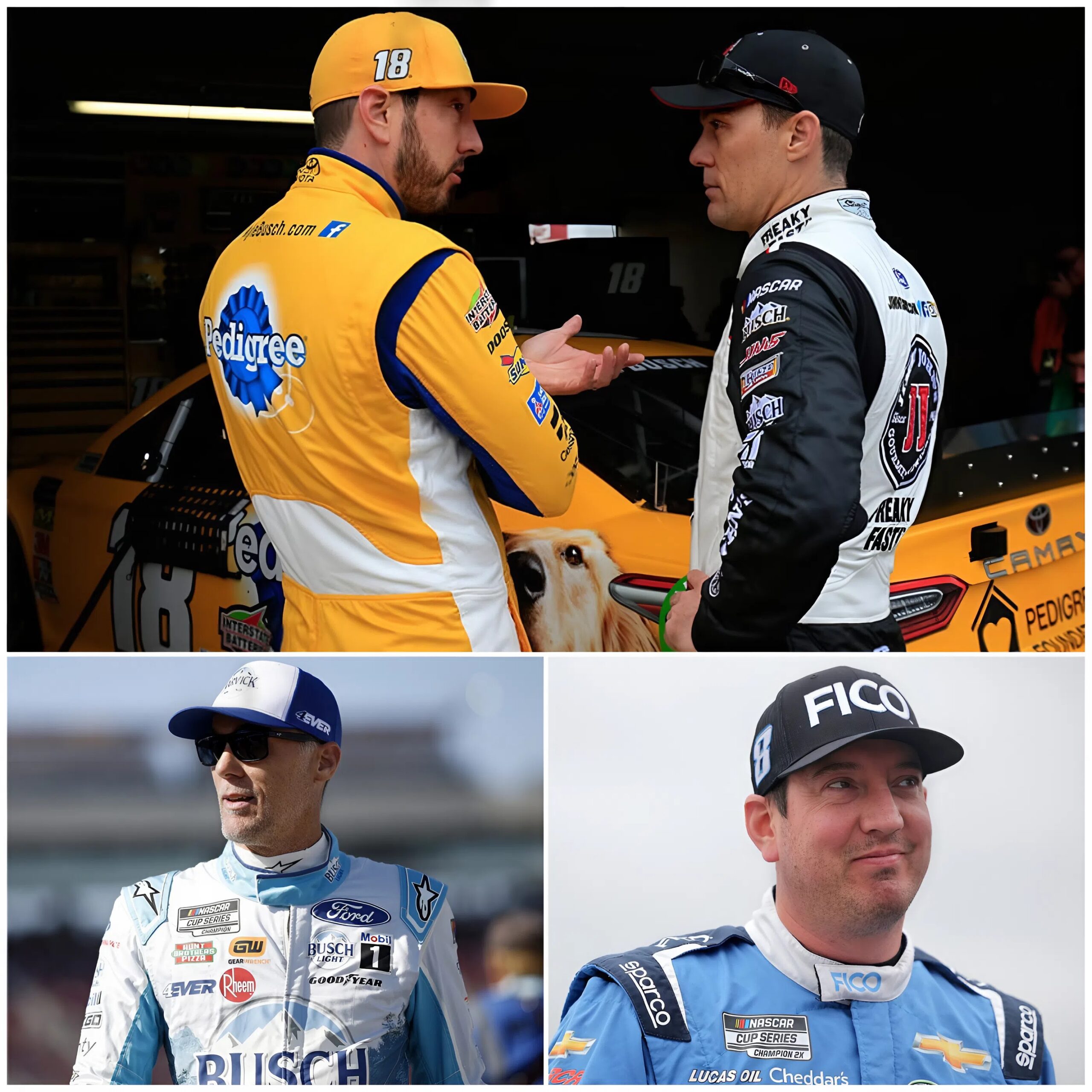
Kevin Harvick Issues Blunt Warning to Kyle Busch as NASCAR Win Drought Reaches Alarming Stage
Kyle Busch is no stranger to pressure. Across nearly two decades in the NASCAR Cup Series, he has thrived in moments when expectations were suffocating and critics were loud. But as the 2026 season grinds forward with Busch still searching for a long-awaited return to Victory Lane, even one of the sport’s most respected champions believes the margin for patience is rapidly disappearing. Kevin Harvick, never one to sugarcoat reality, has issued a blunt warning that cuts to the heart of Busch’s current struggle—and the larger questions surrounding his future competitiveness.
Busch’s win drought has become one of the most uncomfortable storylines in the Cup Series garage. For a driver whose career has been defined by relentless success, multi-win seasons, and an almost intimidating aura of inevitability, the absence of trophies feels jarring. Fans still see flashes of the old Kyle Busch: aggressive restarts, fearless passes, and that unmistakable edge. But flashes don’t win championships, and they certainly don’t quiet doubts in a sport that measures greatness by results.
Kevin Harvick understands that reality better than most. A former champion who competed at an elite level deep into his forties, Harvick has lived through the delicate phase where reputation alone is no longer enough. Speaking with characteristic honesty, Harvick made it clear that Busch’s drought isn’t just a temporary slump—it’s a crossroads moment. In NASCAR, momentum matters, confidence matters, and above all, winning matters. Without it, narratives can change quickly and brutally.
Harvick’s warning was not framed as criticism for criticism’s sake. Instead, it carried the weight of experience. He emphasized that when wins disappear, pressure doesn’t just come from fans or media—it comes from inside the team, the manufacturer, and even the driver himself. For someone like Busch, whose standards are impossibly high, every race without a win compounds frustration. Harvick suggested that if Busch doesn’t find a way to break the drought soon, the mental toll could become just as damaging as any mechanical shortcoming.
The timing of Harvick’s comments is significant. NASCAR has entered an era defined by parity, where younger drivers adapt quickly to new cars, new tracks, and evolving strategies. Veterans are no longer guaranteed weekly dominance. Busch, now competing with a new generation that grew up racing in data-driven environments, faces challenges that didn’t exist earlier in his career. Harvick’s warning underscores a harsh truth: past success buys respect, but it doesn’t buy time.
From a competitive standpoint, Busch’s struggles raise broader questions about his team’s trajectory. Is the equipment capable of winning? Are strategy calls maximizing opportunities? Or is this simply a case of a driver and team still searching for chemistry at the highest level? Harvick hinted that while external factors matter, elite drivers ultimately shoulder the responsibility. In NASCAR, excuses fade quickly, especially for champions.
Yet it would be a mistake to count Kyle Busch out. History suggests he is most dangerous when cornered. Busch has built his legacy on responding to adversity with defiance, often using criticism as fuel. Harvick himself acknowledged that Busch possesses the talent and fire to reverse the narrative in a single weekend. One win can change everything—restore confidence, silence doubters, and remind the garage why Busch has long been feared.
What makes this moment different is the urgency. Harvick’s warning wasn’t about long-term decline; it was about immediacy. NASCAR seasons move fast, and opportunities slip away quickly. A few missed chances can turn a playoff run into an uphill battle. For Busch, each race without a win isn’t just another disappointment—it’s another reminder that the clock is ticking.
Fans remain divided. Some believe Busch is simply enduring a normal slump in a highly competitive era. Others see warning signs of a gradual fade, the inevitable decline that every great driver eventually faces. Harvick’s comments have intensified that debate, giving voice to concerns many were already whispering.
Ultimately, this chapter of Kyle Busch’s career may come down to how he responds to this exact moment. Harvick’s warning serves as both a challenge and a reality check. NASCAR doesn’t wait for anyone, not even champions. The sport rewards those who adapt, fight, and deliver under pressure.
If Busch breaks the drought, the narrative flips instantly—from concern to comeback, from warning signs to redemption. But until that checkered flag falls in his favor, the questions will linger, the pressure will mount, and Kevin Harvick’s words will echo through every garage conversation.
In NASCAR, respect is permanent, but relevance is earned every Sunday. For Kyle Busch, the path back to Victory Lane has never mattered more.