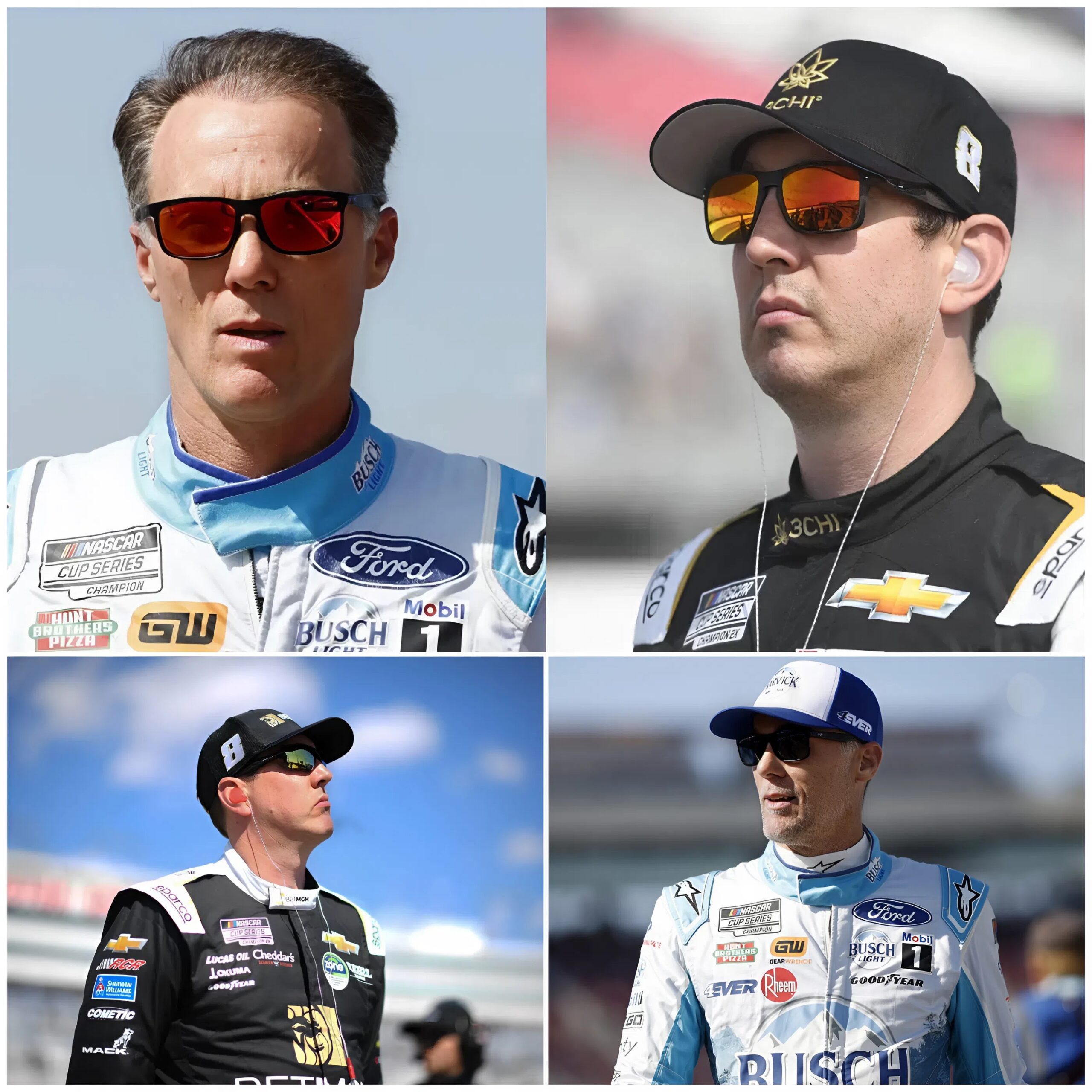
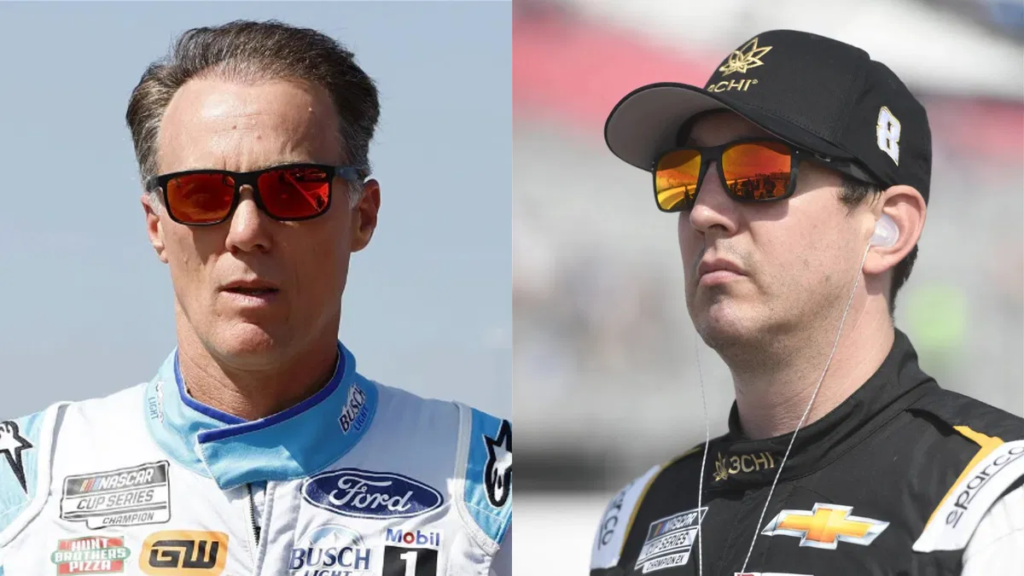
Kevin Harvick Sounds Alarm as Kyle Busch’s Daytona Run Ignites Championship-Level Expectations
The echoes from Daytona are never quiet, but this time the noise isn’t just about drafting partners or last-lap chaos. It’s about belief. After an electrifying run at the season opener, Kyle Busch has reignited something that NASCAR fans know all too well—championship expectations. And when a voice like Kevin Harvick steps in to temper the hype, the conversation instantly shifts from celebration to serious debate.
Busch’s performance under the bright Florida lights wasn’t just competitive—it was commanding. From the moment the green flag waved at Daytona 500, he looked locked in. Aggressive yet calculated, patient yet poised to strike, Busch maneuvered through traffic with the kind of confidence that only a two-time champion can display. For long stretches, it felt like a statement race, the kind that whispers, “This could be the year.”
But if there’s one thing NASCAR history has taught fans, it’s that Daytona brilliance does not automatically translate into a championship parade in November. That’s precisely where Kevin Harvick enters the picture. The 2014 Cup Series champion, now serving as one of the sport’s most respected analysts, offered a measured reminder: February momentum is valuable—but fragile.
Harvick’s warning wasn’t dismissive. In fact, it carried weight because it came from someone who understands the grind of a full season. He’s been through the highs of dominant stretches and the lows of unexpected slumps. He knows how quickly narratives can flip. And in his view, Busch’s Daytona surge, while impressive, is only one chapter in a marathon that demands relentless consistency.
Still, it’s impossible to ignore what Busch accomplished. Since joining Richard Childress Racing, the veteran driver has appeared revitalized. The chemistry, the energy, the hunger—it all feels different. Daytona magnified that shift. Busch didn’t just survive the draft; he thrived in it. He led laps, controlled lanes, and positioned himself as a factor when it mattered most. Even when the chaos tightened in the closing stages, he looked prepared rather than panicked.
For fans, that composure sparks something bigger than a single race result. It sparks belief in a championship resurgence. Busch already owns two Cup titles, yet his last championship feels distant enough that doubters have quietly begun questioning whether his peak years are behind him. Daytona offered a powerful rebuttal.
The intrigue deepens when considering Busch’s career arc. His talent has never been in doubt. Few drivers in modern NASCAR history possess his blend of technical feel, aggression, and racecraft. Whether dominating short tracks or navigating superspeedways, Busch’s versatility has defined his legacy. But championships aren’t won on versatility alone—they’re secured through sustained execution across wildly different venues.
That’s the foundation of Harvick’s caution. Daytona is unique. It rewards drafting precision and strategic alliances as much as raw speed. A strong run there doesn’t necessarily predict how a team will perform at tracks like Bristol, Darlington, or Phoenix. The championship path is paved with adaptability week after week, not just one headline performance.
And yet, there’s something about momentum that can’t be quantified. When a driver starts the season with visible confidence, it radiates through the garage. Crew members work with extra edge. Pit stops sharpen. Strategy calls grow bolder. Daytona didn’t just boost Busch’s stats—it boosted belief within the organization.
The broader championship landscape adds further intrigue. NASCAR’s playoff format means drivers must peak at the right time. Early-season dominance helps, but it doesn’t guarantee anything once elimination rounds begin. Busch knows this reality intimately. He has both thrived and stumbled under playoff pressure. That experience, however, could prove invaluable if this season truly becomes a title chase.
Harvick’s perspective serves as both caution and compliment. By sounding the alarm, he’s acknowledging that Busch’s Daytona performance was strong enough to generate legitimate buzz. The warning isn’t about dampening excitement; it’s about recognizing the standard required to finish the job.
There’s also a psychological element at play. When expectations rise, so does scrutiny. Every pit road miscue, every late-race gamble, every mechanical hiccup will be magnified. Championship talk invites pressure. Busch has historically embraced that spotlight, often thriving when doubted. The question now is whether this latest wave of belief fuels him or burdens him.
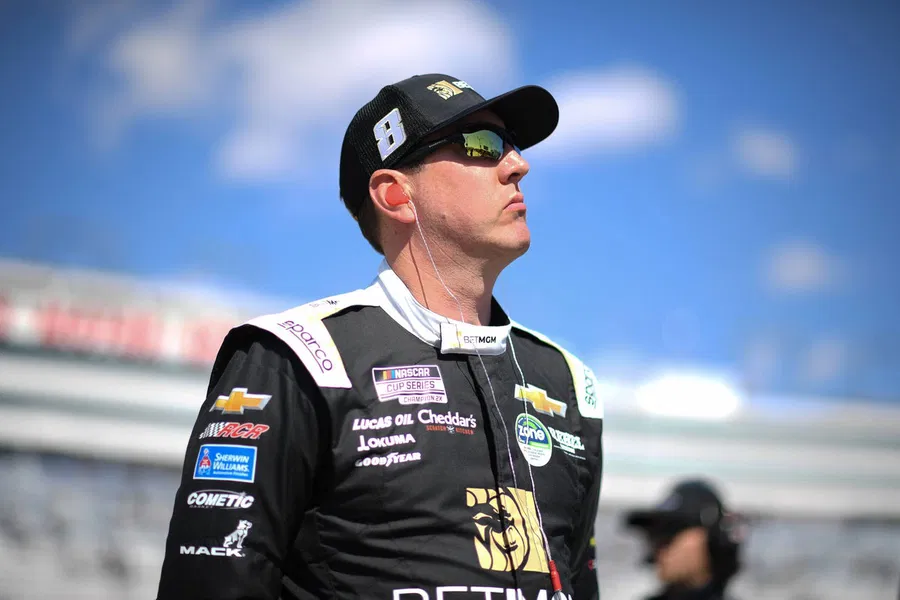
Fans, of course, are already leaning into the narrative. Social media lit up with predictions of a resurgent title run. Some declared Daytona a sign that Busch is poised for one more dominant chapter. Others echoed Harvick’s restraint, reminding everyone that February heroes don’t always become November champions.
What makes this storyline compelling is the balance between history and possibility. Busch’s résumé proves he can deliver when everything aligns. Harvick’s experience proves how hard alignment truly is. The tension between those realities creates a season-long subplot that will follow every lap Busch turns.
If Daytona was a preview, the coming months will determine whether it was also a prophecy. Superspeedways test nerve. Short tracks test aggression. Road courses test finesse. Intermediate ovals test balance and tire management. To convert early hype into a championship banner, Busch must excel across all of them.
Yet perhaps the biggest takeaway from Daytona isn’t the finish position or the laps led. It’s the energy. Busch looked engaged. Hungry. Sharp. That matters. In a sport where confidence can swing outcomes by inches, belief often precedes results.
As NASCAR moves deeper into the season, the spotlight will remain fixed on Busch’s trajectory. Each strong run will amplify the championship whispers. Each setback will validate Harvick’s warning. That push and pull is what defines a title chase long before the playoffs begin.
For now, one truth stands clear: Busch’s Daytona performance has shifted the conversation. It has forced fans, analysts, and competitors alike to reconsider his place in the current championship hierarchy. Whether that momentum sustains or fades remains to be seen.
But if February taught us anything, it’s this—Kyle Busch is not content to fade quietly into the background. And when a driver of his caliber signals intent, the rest of the garage listens. Even Kevin Harvick, alarm bells and all, knows that a fired-up Busch is one of the most dangerous forces in NASCAR.