
Mark Martin Recalls How a 7-Minute NASCAR Rule Turned His Hall of Fame Speech Into a Personal Battle
When Mark Martin finally stepped onto the stage as a NASCAR Hall of Fame inductee, it should have been the purest moment of celebration in a career defined by perseverance, excellence, and respect across generations of fans. Instead, the legendary driver found himself fighting an unexpected internal battle — not against rivals on the track, but against a ticking clock enforced by a strict seven-minute rule that changed the emotional weight of the night forever.
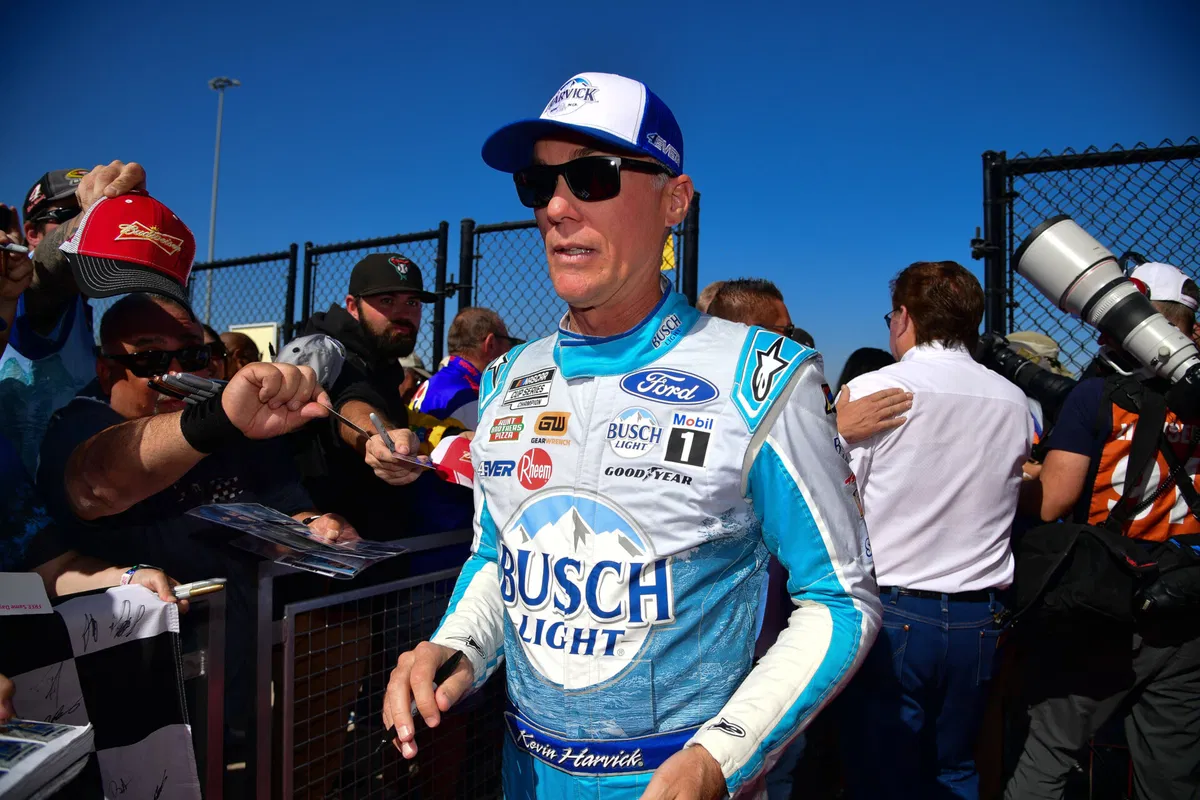
Martin, widely regarded as one of the greatest drivers never to win a Cup Series championship, had waited decades for that moment. His resume spoke for itself: more than 40 Cup wins, five runner-up championship finishes, success across multiple NASCAR divisions, and a reputation as one of the sport’s cleanest and most professional competitors. Yet when the spotlight finally arrived, it wasn’t the accolades or the applause that dominated his thoughts. It was the pressure of condensing a lifetime into seven minutes.
In recent reflections, Martin admitted that the Hall of Fame speech rule — designed to keep ceremonies efficient and television-friendly — felt deeply personal once he was standing at the podium. The rule itself was simple: inductees were allotted just seven minutes to deliver their remarks. No extensions. No flexibility. What Martin hadn’t anticipated was how emotionally restrictive that limit would feel when faced with the reality of thanking family, crew members, mentors, competitors, and fans who had shaped his journey.
For Martin, NASCAR was never just a job. It was sacrifice layered upon sacrifice. It was missed holidays, physical pain, and relentless pressure to perform in an era dominated by icons like Dale Earnhardt, Jeff Gordon, and Jimmie Johnson. His Hall of Fame speech, in his mind, wasn’t meant to be a highlight reel — it was meant to be a moment of gratitude and closure. The seven-minute rule, however, forced him into what he later described as a mental tug-of-war between authenticity and efficiency.
As the clock counted down, Martin found himself editing his emotions in real time. He skipped names he desperately wanted to mention. He shortened stories that defined his career. He felt the weight of knowing that once the microphone cut off, there would be no redo. The result, he says, was a speech that sounded polished on the surface but felt incomplete in his heart.
Fans watching from home likely didn’t notice the internal struggle. To them, Martin was composed, gracious, and professional — exactly as he had always been behind the wheel. But internally, he was battling frustration and regret, aware that the format had quietly taken something away from a moment he had envisioned for years. It wasn’t anger toward NASCAR, he later clarified, but disappointment that such a deeply personal milestone had to fit into a rigid structure.

The experience sparked a broader conversation among fans and former drivers about how Hall of Fame ceremonies should balance entertainment with emotion. While time limits are common across sports, Martin’s honesty highlighted a side of induction nights rarely discussed: the psychological weight of trying to summarize an entire life’s work under pressure. In NASCAR, where careers are built on relationships as much as results, seven minutes can feel painfully short.
Martin’s story resonated especially strongly because it aligned with how his career unfolded. He was always close, always competitive, always respected — yet often just short of the ultimate prize. The Hall of Fame speech, ironically, mirrored that narrative. Even in triumph, there was a sense of something left unfinished.
Since sharing his reflections, Martin has received an outpouring of support from fans who appreciated his vulnerability. Many said his words gave them a new appreciation for how much emotion drivers carry long after the engines shut off. Others called on NASCAR to reconsider the rigidity of the rule, at least allowing flexibility for inductees whose stories span decades and eras of the sport.
NASCAR officials, for their part, have maintained that the rule exists to ensure fairness and keep ceremonies moving. But Martin’s experience has made one thing clear: rules designed for logistics can have unintended emotional consequences. In a sport built on passion, legacy, and loyalty, moments like Hall of Fame inductions carry a weight that can’t always be measured in minutes.
Today, Mark Martin looks back on that night with mixed emotions — pride in the honor, gratitude for the recognition, and a lingering sense of unfinished business. Yet even that feels fitting. His career was never about perfection or easy endings. It was about resilience, class, and pushing forward even when circumstances weren’t ideal.
In the end, Martin’s seven-minute battle wasn’t lost. It simply became another chapter in a story NASCAR fans know well: a legend giving everything he has, right up to the final second.