
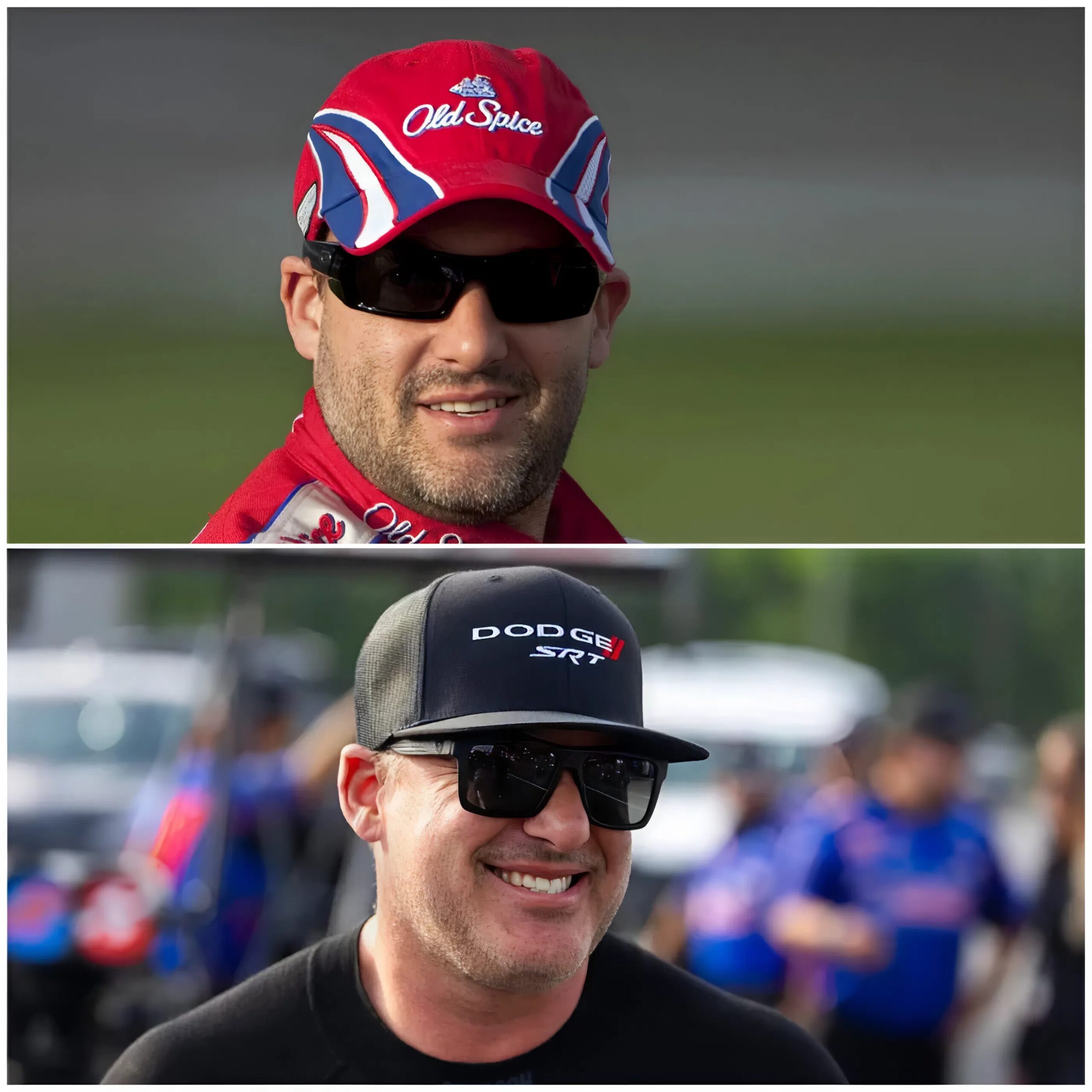
NASCAR Fans Erupt as Tony Stewart’s Old-School Aura Reignites GOAT Debate
The roar of stock car engines has always carried more than just sound—it carries memory, legacy, and the kind of passion that turns drivers into legends. This week, that passion boiled over once again as NASCAR fans found themselves locked in a fiery debate, all sparked by the unmistakable old-school aura of Tony Stewart. In a sport constantly evolving with new rules, new formats, and a new generation of talent, Stewart’s name has suddenly returned to center stage, reigniting the never-ending question: who truly is NASCAR’s Greatest of All Time?
It didn’t take much to light the fuse. A resurfaced highlight reel of Stewart muscling his way through the field, combined with a wave of nostalgic commentary across social media, reminded fans exactly why “Smoke” remains one of the most respected figures in racing history. The swagger. The grit. The unapologetic, blue-collar attitude. Stewart didn’t just race cars—he imposed his will on the track.
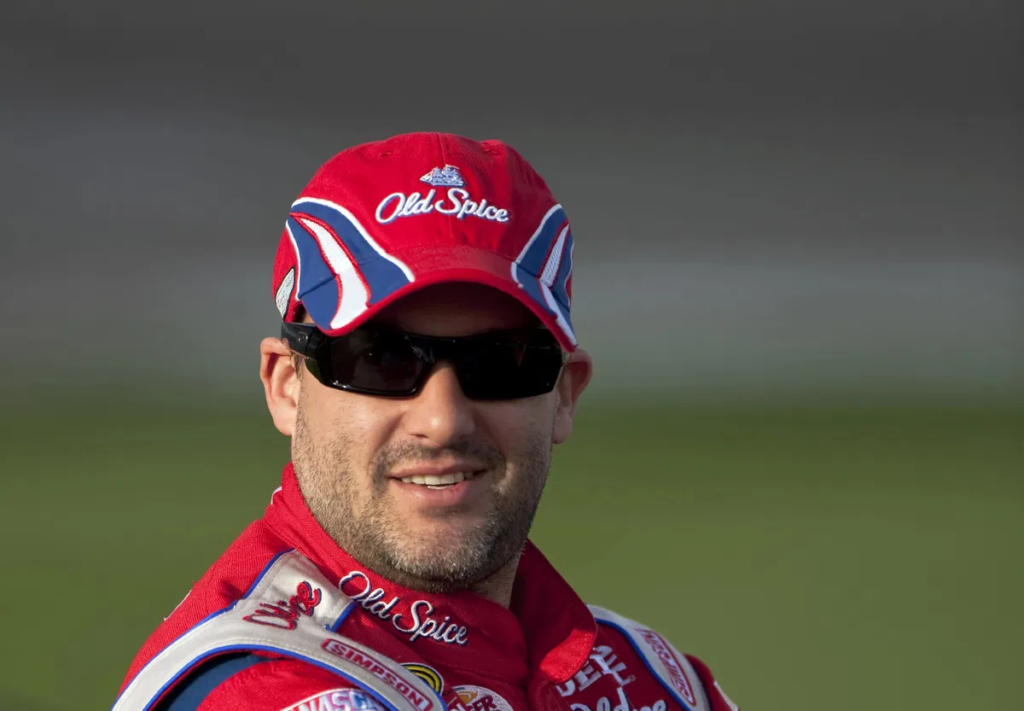
For longtime followers of the sport, Stewart represents an era when personality was as powerful as horsepower. His aggressive driving style, coupled with a fearless willingness to speak his mind, made him a fan favorite and a villain depending on where you stood. But love him or hate him, few could deny his impact. Three Cup Series championships and dozens of wins cemented his résumé, yet statistics alone fail to capture the essence of what made him special.
The GOAT debate in NASCAR has never been simple. Names like Dale Earnhardt, Jimmie Johnson, and Richard Petty inevitably dominate the conversation. Seven championships. Record-breaking wins. Era-defining dominance. On paper, those credentials often overshadow Stewart’s three titles. But the argument swelling online isn’t strictly about numbers—it’s about aura.
Fans argue that Stewart’s versatility alone separates him from many peers. Before conquering NASCAR’s top level, he had already claimed the 1997 IndyCar championship and proved himself in open-wheel racing. His ability to jump between disciplines and succeed added layers to his legend. In an age where specialization is common, Stewart’s adaptability feels almost mythical.
That versatility translated into NASCAR success almost immediately. When Stewart entered the Cup Series full-time in 1999, he didn’t look like a rookie. He looked like a veteran ready to disrupt the establishment. Over the years, he built a reputation as one of the fiercest competitors in the garage, unafraid to mix it up on restarts or trade paint if necessary. He raced with an edge that reflected NASCAR’s rough-and-tumble roots.

The tipping point for many fans revisiting the GOAT conversation is Stewart’s 2011 championship run. In what remains one of the most dramatic title battles in modern NASCAR history, Stewart went winless during the regular season, only to explode in the playoffs with five victories in ten races. His clutch performance, capped by a tie-breaker win over Carl Edwards, is often cited as one of the grittiest comebacks the sport has ever seen. It wasn’t just a championship—it was a statement.
Yet the debate isn’t purely nostalgic. Today’s NASCAR landscape, with its Next Gen car and evolving playoff format, feels drastically different from Stewart’s prime years. Some fans argue that his old-school mentality—raw talent, mechanical feel, and instinct over simulation—would still thrive. Others question whether modern competition, analytics, and parity would blunt his edge. That tension between eras fuels the online firestorm.
Comparisons to Johnson inevitably surface. Johnson’s seven championships, including five consecutive titles, are a statistical mountain few can climb. His partnership with crew chief Chad Knaus defined an era of sustained excellence. Meanwhile, Earnhardt’s intimidating presence and seven championships carved him into motorsports folklore. Petty’s 200 career wins remain a record that feels untouchable. Stewart’s numbers don’t surpass those giants, but fans insist greatness isn’t measured solely in totals.
There’s also the ownership factor. After co-founding Stewart-Haas Racing, Stewart transitioned from driver to team owner, shaping the careers of others while maintaining influence in the sport’s direction. That dual role adds weight to his legacy. He wasn’t just a driver passing through an era—he became an architect of it.
Social media has amplified the discussion to a fever pitch. Clips of Stewart sliding through dirt tracks, trading barbs in post-race interviews, and celebrating with raw emotion remind fans of a time when authenticity felt unfiltered. In an age of polished press conferences and corporate messaging, Stewart’s blunt honesty feels refreshing.
Still, the GOAT debate remains inherently subjective. For some, it’s about championships. For others, it’s about impact. For many younger fans who grew up watching Stewart battle legends and rising stars alike, his influence shaped their love for the sport. They see in him a bridge between NASCAR’s past and present—a driver who carried old-school toughness into the modern era.
As the sport continues to evolve, discussions like these underscore NASCAR’s enduring appeal. The debate itself keeps history alive. Every generation reexamines its heroes, replays iconic finishes, and redefines what greatness means. Stewart’s resurgence in the conversation proves that legacy isn’t static—it grows stronger with time.
In the end, there may never be a definitive answer to who stands atop NASCAR’s Mount Rushmore. But the renewed energy surrounding Tony Stewart shows that greatness transcends statistics. It lives in the way fans remember how a driver made them feel. It lives in the highlight reels that still give goosebumps. And it lives in debates that refuse to fade away.
Whether Stewart ultimately claims the GOAT crown in fans’ hearts or remains one of several titans sharing the spotlight, one thing is certain: his old-school aura has once again set NASCAR’s passionate community ablaze. And as long as engines fire and debates rage, the legend of Tony Stewart will keep fueling the sport’s most timeless argument.