Snowstorm Chaos Looms Over NASCAR Clash as Fans Brace for Possible Race Cancellation
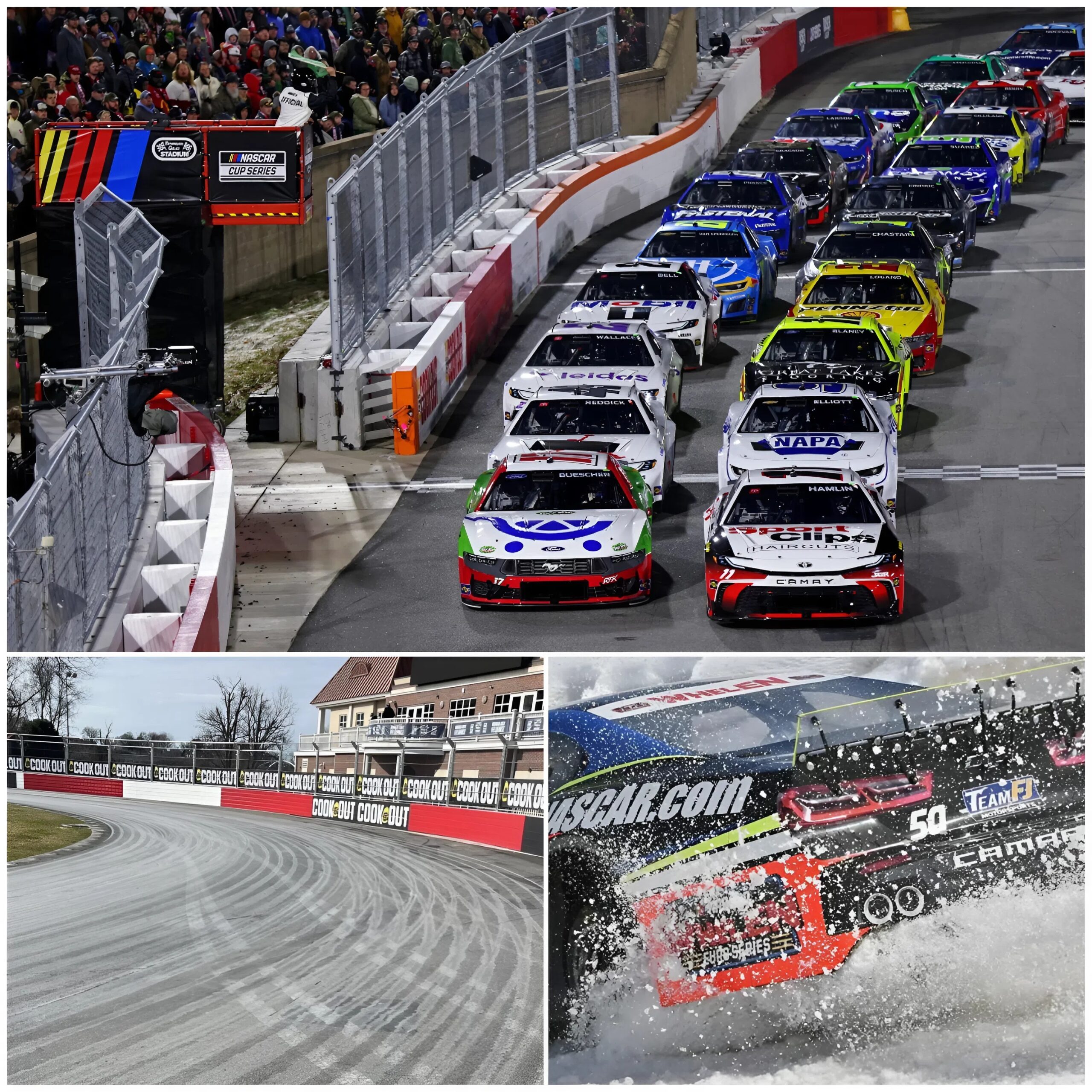
A wave of uncertainty swept through the NASCAR community this week as severe snowstorms threatened to derail one of the most anticipated events on the calendar: the Clash race weekend. What was supposed to be a high-energy showcase to kick off the season instead became a tense waiting game, with fans, teams, and officials glued to weather forecasts and radar maps, wondering whether nature would have the final say.
The Clash has long been marketed as a celebration rather than a traditional points-paying race — a spectacle designed to build momentum, spark storylines, and remind fans that NASCAR is back. But as winter storms intensified and travel advisories spread across the region, excitement quickly gave way to concern. Social media platforms lit up with anxious posts from fans asking the same question: would the race even happen?
Meteorologists warned of heavy snowfall, icy conditions, and plunging temperatures that could make track preparation nearly impossible and travel unsafe. For NASCAR, the challenge was not just about whether cars could race, but whether teams, officials, broadcasters, and tens of thousands of fans could even reach the venue. The Clash, often held at a nontraditional or marquee location, relies heavily on logistics working flawlessly — something winter weather has a habit of disrupting.
Behind the scenes, NASCAR officials were forced into contingency mode. Sources indicated that emergency meetings were held to evaluate potential schedule adjustments, delays, or, in the worst-case scenario, a complete cancellation. While NASCAR has dealt with rain delays countless times, snow presents a different level of complexity. Track surfaces, pit roads, and grandstands all require extensive clearing, and freezing temperatures can compromise safety for both drivers and crews.
Drivers, meanwhile, found themselves in an unusual position. While many expressed disappointment at the possibility of losing a high-profile race, others emphasized safety over spectacle. Several veterans pointed out that the Clash, while important for momentum and exposure, is not worth unnecessary risk. Younger drivers, eager to make a statement early in the season, were understandably frustrated but echoed similar sentiments. No one wants their year derailed before it even begins.
Fans felt the emotional whiplash most intensely. Many had already invested in travel, hotels, and tickets, some planning months in advance. For them, the Clash is not just a race, but a pilgrimage — a chance to reconnect with the sport, see favorite drivers up close, and soak in the atmosphere. The idea that snow could cancel the weekend sparked anger, disappointment, and heated debate online. Some questioned why the event was scheduled in a region prone to winter storms, while others defended NASCAR, arguing that unpredictable weather is simply part of motorsports.
From a business perspective, the stakes were enormous. The Clash is a key television product, designed to draw casual viewers and generate early-season buzz. A cancellation or major delay would ripple through broadcast schedules, advertising commitments, and sponsor activations. Brands tied to the event had planned campaigns around race week, and a last-minute change could blunt the marketing impact NASCAR relies on to start the year strong.
NASCAR’s leadership faced a delicate balancing act. On one hand, pushing forward despite dangerous conditions could trigger backlash and raise serious safety concerns. On the other, canceling the race outright risked disappointing fans and partners while feeding criticism about scheduling decisions. The organization emphasized that all options remained on the table and that safety would ultimately guide the final call.
As the snow continued to fall, comparisons were drawn to other sports leagues that have struggled with weather-related disruptions. Unlike indoor sports, motorsports lives at the mercy of the elements, and while rain delays are expected, snowstorms push the limits of adaptability. Some fans suggested moving the Clash permanently to warmer climates, while traditionalists argued that unpredictability adds drama and that NASCAR should not overcorrect based on one chaotic weekend.
What made the situation especially tense was the lack of certainty. Forecasts shifted by the hour, offering brief hope before delivering fresh concern. Each update sent waves through the fanbase, with optimism and panic trading places repeatedly. NASCAR’s official statements remained measured, emphasizing constant monitoring and coordination with local authorities.
By the time race weekend approached, the Clash had transformed from a celebration of speed into a test of resilience — for NASCAR as an organization and for its fans. Whether the green flag would fly or not, the episode underscored how fragile even the most carefully planned events can be when confronted by extreme weather.
In the end, the snowstorm threat served as a stark reminder that motorsports is not just about horsepower and competition, but about adaptability, decision-making, and trust. Fans may disagree on how NASCAR should handle such situations, but most agree on one thing: the sport is at its best when safety, transparency, and respect for the fan experience come first.
As the NASCAR world waits for a final decision, one thing is certain — even before the season officially begins, the Clash has already delivered drama. Not on the track, but in the form of swirling snow, tense forecasts, and a fanbase holding its breath, hoping that racing, not weather, will ultimately steal the spotlight.